

News
News Center
QTD Tower Crane Operating Procedures
Release time:
2022-06-27
At the beginning of QTD tower crane design, the manufacturer should discuss and formulate its service life, lifting weight, jib length, erection height, use limit and frequency, weather impact, use stability and safety factor determine the safety of tower crane fixture and manufacturing cost-effectiveness and other factors. Therefore, choosing a tower crane produced by a qualified manufacturer is the first step in safety. The manufacturer shall provide a complete operation manual for the user.

QTDThe tower crane should be started in accordance with the standard operating procedures
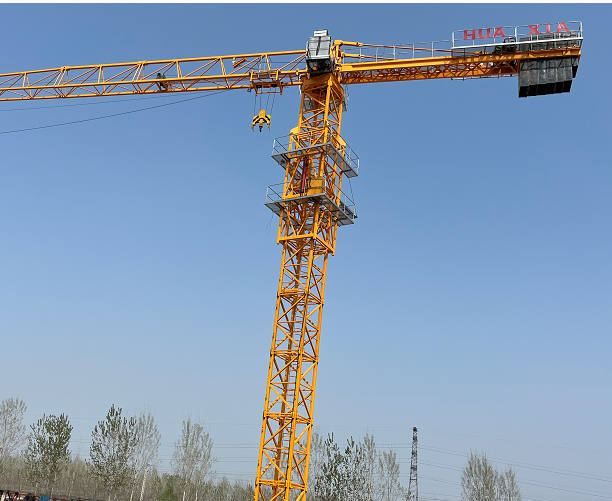
(1) QTD tower cranes are very different from traditional fixed or mobile cranes, so special attention should be paid to safety.
(2) At the beginning of QTD tower crane design, the manufacturer should discuss and formulate its service life, large lifting weight, jib length, large erection height, large service limit and frequency, weather impact, use stability and safety factor determine the safety of tower crane fixture and manufacturing cost-effectiveness and other factors. Therefore, choosing a tower crane produced by a qualified manufacturer is the first step in safety. The manufacturer shall provide a complete operation manual for the user.
(3) The safety of QTD tower crane comes from the selection of structural steel and the quality control of manufacturing. Therefore, when assembling the tower crane, it should be assembled by qualified professionals in accordance with the operating procedures provided by the manufacturer.
(4) Although the QTD tower crane is mainly composed of angle steel, steel pipe or section steel, it will still have a considerable area to withstand the pressure brought by the wind. Therefore, pay attention to the change of weather in use. When the wind is too strong, the machine cannot be operated, repaired or assembled.
(5) As the bridge is located at the top of the tower, the view of lifting, unloading and unloading will be uncertain due to the distance. Therefore, it is necessary to set up a special commander to assist the operation of the machine.
(6) Each tower crane shall have a complete instruction manual, including design features, preparation for installation, lifting steps, operating techniques, maintenance recommendations, general and special safety precautions. Instructions for use should be written in words and graphics that employees can understand and placed in a place that employees can easily access.
(7) Various mechanisms of QTD tower crane should be designed and assembled according to their carrying capacity. All mechanisms should be capable of carrying large loads. In the design and assembly, the safety factor specified by the competent authority shall be adopted.
(8)QTDTower crane accessories, such as counterweights, safety cables, safety rods or safety chains, should be fixed.
(9) The safety factor of the fixed rope drum should exceed the larger working load capacity of the rope.
(10) The rim of the rope drum should exceed the greater height of the overall rope.
(11) All rotating or moving parts on the QTD tower crane should be protected by protective covers or protective covers.
(12) The bridge frame of the QTD tower crane should be made of fireproof materials, the windows should be designed to be easy to clean, the glass should be safety glass, and there should be sufficient space, proper lighting and a good ventilation system inside. bridge so that the operator can perform his work internally. If working in a hot working environment, there should be a temperature adjustment device in the bridge.
(13) Fire extinguishers shall be provided on bridges in case of emergency.
(14) When QTD lifts the tower crane, relevant preparations must be made, including: the method of fixing the crane, preventing the collapse of the crane and stabilizing the balance at the bottom of the crane, confirming the strength of the supporting crane foundation and confirming whether the strength of the supporting structure is sufficient to wait for work. Precautions for the preparation shall be provided by the manufacturer, and the operator shall follow the precautions in the operation manual. It is forbidden to change the contents of the manual without the consent of the manufacturer.
(15) Only qualified professionals who have been trained and licensed shall carry out the lifting, maintenance or operation of cranes.
(16) Weather shall be taken into account when lifting from a crane and this work shall only be carried out under suitable weather conditions.
(17) The assembly procedure of the crane should be carried out in accordance with the operating procedures provided by the manufacturer. After completing the hoisting operation, safety inspection and performance test shall be carried out immediately, and the hoisting operation can be used only after it is confirmed to be correct.
(18) The foundation strength of the QTD tower crane shall be sufficient to support the impact force caused by the collapse of the crane. During the installation process, the manufacturer's or structural professional's recommendations should be followed.
(19) All structures or foundations that fix the tower crane in place, whether during operation, maintenance or shutdown, should be checked for fixation. In the case of mobile tower cranes, there should also be brakes or fixtures sufficient to support strong wind resistance. The part supporting the crane shall not vibrate.
(20) The specifications of the counterweight should meet the manufacturer's recommendations and should be fixed by steel cables or appropriate methods. The weight of the counterweight shall be checked before each crane assembly. Nameplates indicating the weight and location of the counterweight shall be posted in a place where they can be easily seen by the relevant personnel.
(21) After the QTD tower crane is assembled, a safety inspection should be carried out immediately, and the performance test can only be carried out after the inspection items mentioned in the operation manual are completed. After completion of the test work, the overload device shall be set in accordance with the manufacturer's recommendations.
(22) It is forbidden to place inflammable and explosive articles in the bridge.
(23) All alarms and safety devices should be checked in each shift.
(24)QTDWhen the tower crane operator operates on the bridge, there should be a hanging commander who can command with gestures and cannot be replaced by wireless communication tools. The pilot should fully follow the instructions of the commander.
(25) The meaning represented by various command gestures and warning messages shall be posted on the bridge.
(26) During hoisting, safety precautions for hoisting shall be observed. If two or more cranes lift objects together, special attention should be paid to coordination.
(27) The main purpose of tower cranes is to lift objects, not to tow or demolish buildings.
(28) When the hanging personnel operate the machine, they should confirm the weight of the hanging object. When the load is exceeded, hanging operation shall be prohibited.
(29) The larger load of the hook should be clearly marked. Hooks shall be provided with anti-slip sheets. The integrity of the hook should be confirmed before operation.
(30) When operating the QTD tower crane, pay attention to the surrounding operating environment. If there are wires, the necessary precautions should be taken. If there is another tower crane nearby, the operation priority should be set to prevent collision.
(31) The limit switch to prevent overload or over-rolling is not a stop switch and cannot be used as a control mechanism to stop the machine.
(32)QTDWhen the tower crane stops running, it should be completely unloaded. Except for special circumstances, under normal circumstances, when the crane is unattended, its lifting arm should be kept free to rotate, and the hook should be raised to a higher position and fixed.
(33) Before the operator leaves the bridge, he should cut off the power and lock the door.
(34) When the crane is running, the operator must not stand or lean against the bridge.
(35) Do not climb the boom unless necessary. When climbing, wear safety ropes and necessary personal protective equipment.
Tag:
RELATED INFORMATION

Committed to providing reliable technology and quality-oriented tower cranes to customers worldwide
Links:
Contact Us
Export Department:+86-539-6015699/+86-631-5982999
Huaxia Heavy Industry: +86-539-6015699(Domestic)
After-sales service: +86-631-5980999/+86-631-5982299
Hotline Fax:
86-631-5987519(Domestic)
86-631-5999076(Abroad)
Company Email:huaxia12007@163.com
Company address: 115 Huaxia Road, Economic Development Zone, Linyi City, Shandong Province
Linyi Huaxia:+86-539-6015699
Technical advice:+86-539-6015617
Postal Code: 276025
Sweep code to pay attention to WeChat